Source-to-Syllabus
A Claude Code plugin that turns a codebase into an interactive course.
The problem
Reading a new repository usually means jumping between files without knowing which ideas are foundational. A folder summary helps with orientation but does not teach why the system is shaped that way or where its tradeoffs live.
My contribution
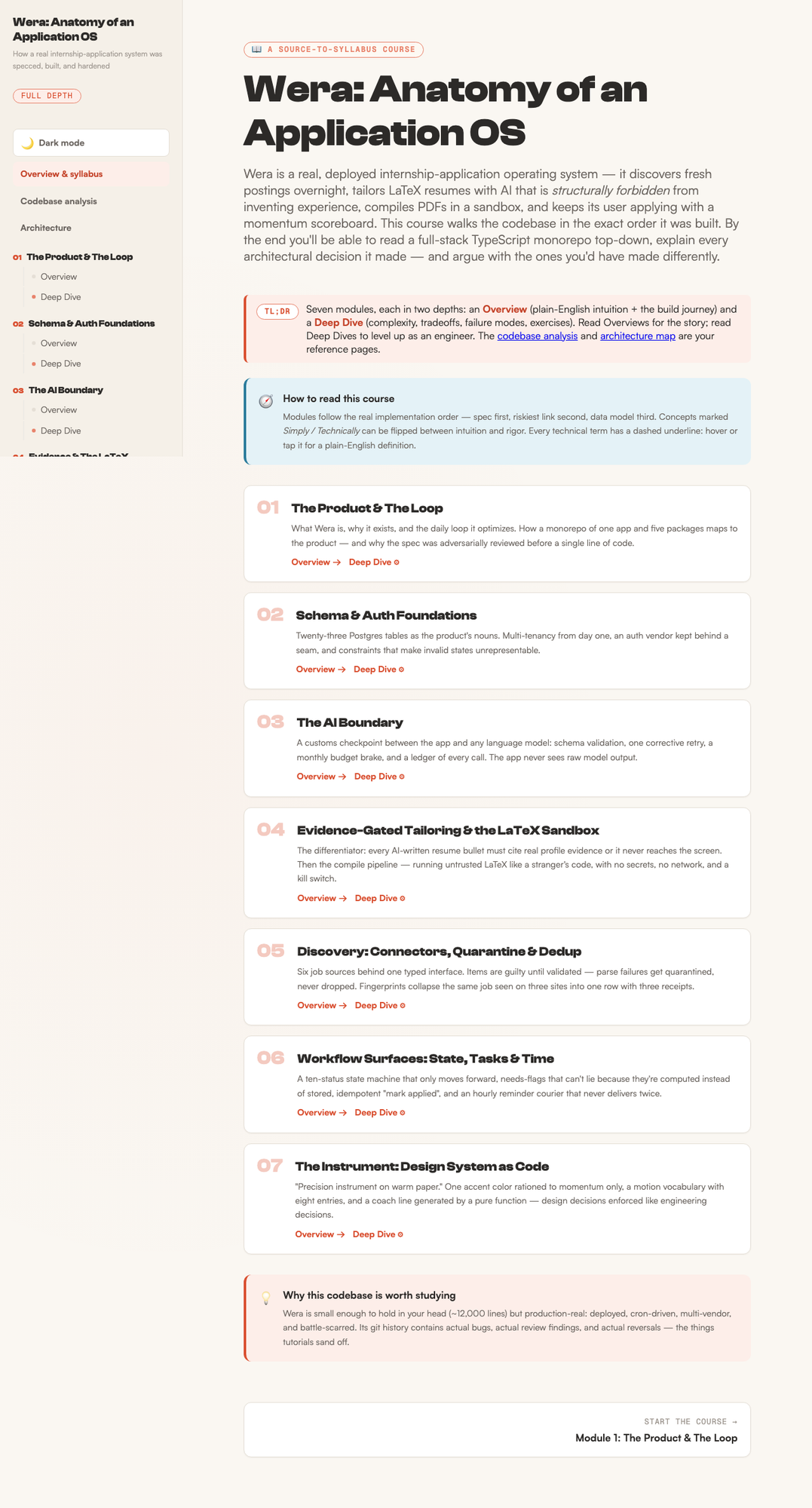
I wrote the Claude Code skill, the analysis contract, the course outline rules, the shared HTML/CSS/JavaScript shell, and the depth controls. The plugin first writes a codebase analysis, then builds the syllabus around architecture, workflow, failure modes, and exercises.
Difficult decisions
Analyze before writing
The plugin saves a reviewable analysis report before generating lessons. That separates repository facts from presentation choices and gives the user an audit point.
Teach at two depths
Every module has an overview and a deep dive. Inline “Simply / Technically” controls handle individual concepts without duplicating whole pages.
Keep output portable
The course is plain HTML, CSS, and JavaScript with shared files and relative links. It can be reviewed, secret-scanned, and hosted without a package install.
Evidence
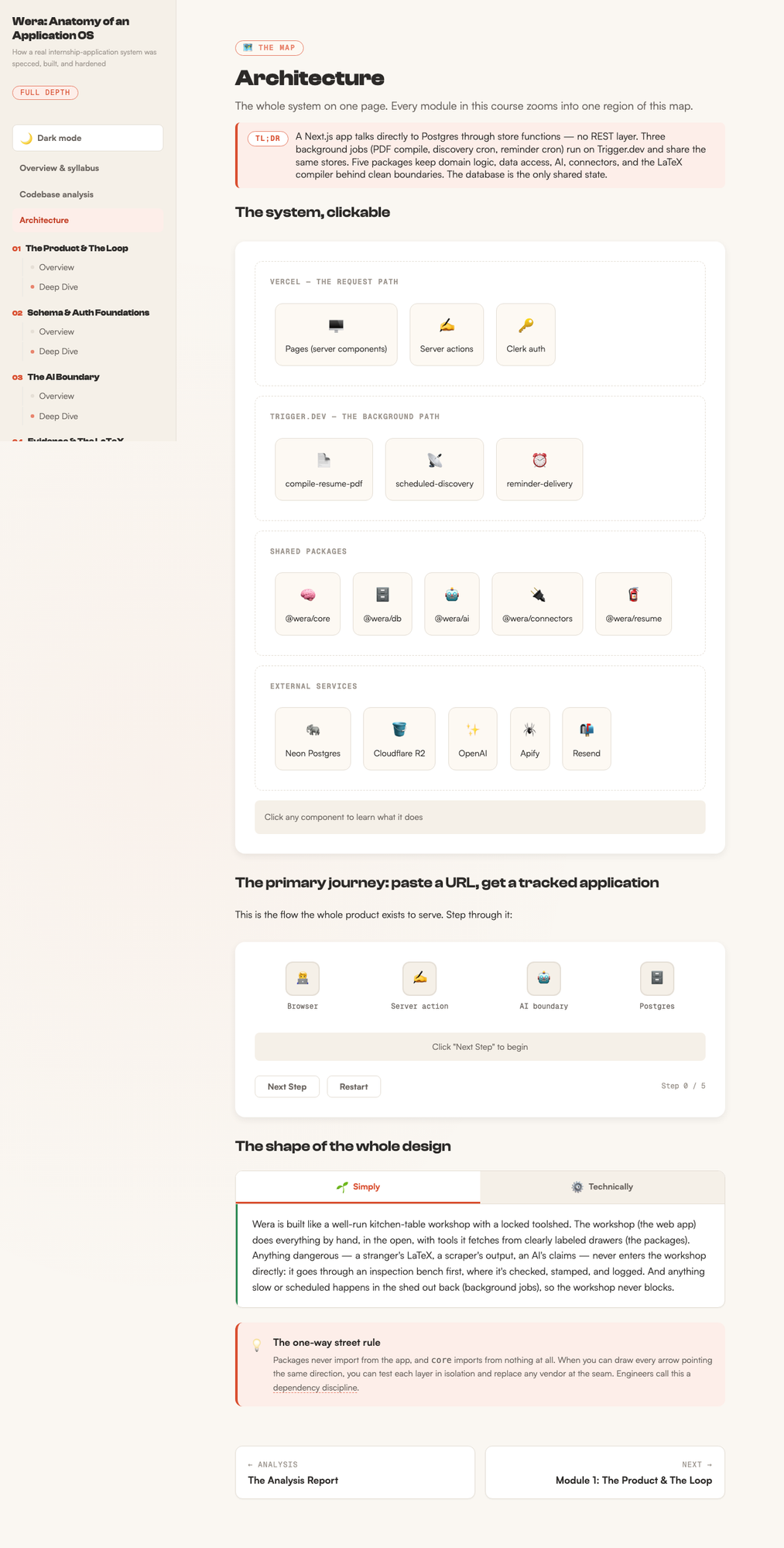
The published demo contains the syllabus, analysis, architecture map, and fourteen module pages. It was reviewed for credentials and personal data before publication.
Result and next step
The Wera run produced a usable 17-page course that explains a real full-stack system from product loop to compiler sandbox. The next step is to test the plugin across repositories with different languages and architectural styles, then score factual drift and lesson usefulness during review.